
Thank you to everyone who has already submitted a piece for the new issue on work. If you were thinking about sending something, here's a reminder that there are 19 days to go til the deadline - February 21st.
As inspiration, here's a little flashback to Lumpen 13 with a testimonial on shit jobs by Some Migrant.
“Agency, go home!”: An Odyssey of Temporary Labour
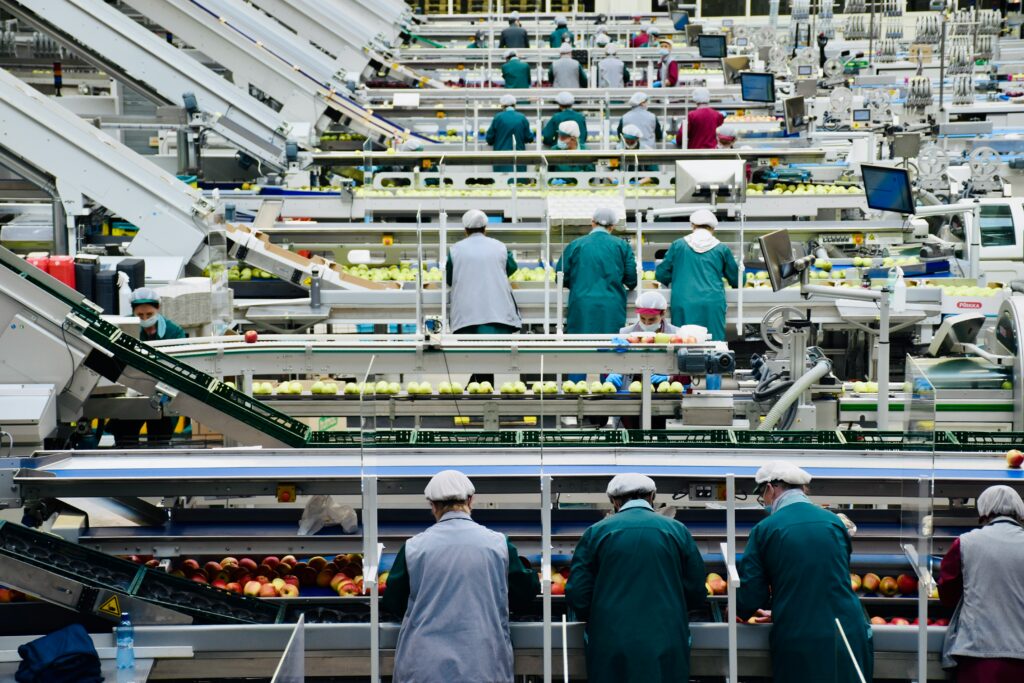
Because life isn't linear and definitely not always under our control, I did a little time loop and, after more than 15 years, I was back to working at a food production factory on a "temporary" contract by one of the city's many employment agencies. Not only I needed money but I was interested in what changed in those years and how my own memories are different from the current reality. As part of this little experiment I decided to pretend that my English is not as fluent as it really is. I have to admit I wanted an opportunity to troll the supervisors and managers better but unfortunately did not have that many chances to actually do that. I did some notes while working and I am writing two months after quitting so my memory is still quite fresh. If you find the below loose and somewhat chaotic let it be a testament to my poor note taking skills and not a proof that I am making this shit up.
The recruitment process was super easy; after one phone call, I was told to come to the office. Located on the first floor in a building that has seen better times but surprisingly had a guard at the main entrance, the corridor greeted me with a poster advertising "warehouse jobs available now!". Two or three Black guys entered before me, and when asked by the woman at the counter what kind of job they were looking for, they replied in their basic English that it was the "warehouse job" they were after. The woman almost screamed at them that there were no warehouse jobs available and she could offer them a "chicken factory". They politely said they weren't interested and left. She didn't even bother to say goodbye. When it was my turn I asked for the chicken place straight away and was given a form to fill. Loads of pages with small print and internal signatures marked the newest one as generated in 2012. So far, back to the past. The experience was like travelling back to 2007. I slowly filled the form, and went back to the counter. I could see people sitting in front of their computers and hear them chatting about lunch meals and other things, but no one bothered to come and take the forms. After a couple of minutes, one grabbed it on the way back from the loo and said that they would call me. They didn't. So I came back after two days and was given a number to call to arrange an induction. If you think that they were rude to me you are right. But also, this is a method of establishing the simple, but important fact that is elementary to your work for the agency:
Your time is not important. We, the agency, decide what counts as work time, how and when to contact you, and how long or short an advance we will give you before asking you to work, go home, or change the work placement. That way, not only will you be trying harder to satisfy us, but you will also become more dependent, and as a sweet bonus, you won't have the option to plan silly moves like a job interview elsewhere.
It may sound like a conspiracy theory, but I don't believe that what at first glance looks like the lack of structure is a coincidence. When I look at how everything works at an agency, it becomes clear that it is a mini-system of quite real oppression designed or evolved in practice to control the immigrant workforce better. Take the "temporary" nature of the agency work in factories. Some people might think of agency workers as some kind of freelancers or gig economy app-workers but this is far from reality. You work at the same place and have the same starting hours for weeks, report to the same supervisors, and have the same responsibilities as full-time staff. You need to reply to the text message to confirm your attendance and, in theory, can say you are not coming that day. But when I tried that, I was immediately called by the agency coordinator, who strongly hinted that if I didn't come, there would be no more shifts for me in the future. I also received "attendance mandatory" texts. By the way, the text would be sent whenever they felt like it. For the shift starting at 3pm, I received it as early as 8am and as late as 1pm. On some days, I didn't receive it at all, so I stayed at home with no chance to make any plans for the day off. Being "offered" a shift (in the language they use you are "offered" a shift so you better be grateful) doesn't mean that you will work 8 hours. During weekdays, it wasn't unusual for the production to slow down an hour or two before the end of the afternoon shift, and one of the managers would go around to shout, "agency, go home!". We were required to leave early, and our machines and places at the lines were taken over by the permanent staff, so their workplaces could be shut down and cleaned earlier without paying the cleaners any overtime. I worked on a fixed shift that required us to work Saturdays in exchange for Mondays off. Saturdays were always busy, so we often worked 10-12 hours. But because they "saved" those 4 hours by sending us home on Tuesday, Wednesday and, say, Friday, the additional hours on Saturday did not exceed the contracted 40 hours, so no overtime for you, baby! If anything, this is cheaper for the factory as the Saturday shift was a morning one, so they did not have to pay us a higher rate for the afternoon. Saving money everywhere. Win.
Wasting your time, being unpredictable with it and juggling with work hours are not the only methods of control. Another one is straight-on dehumanisation and rudeness. Agency staff wear different colours of hair nets than regular workers, and supervisors and management have yet another colour. So you know who is who at the first glance. Some agency workers are used to filling the gaps where production is busier on a given day so they move every day to a different work placement. When I did that for couple of days no one bothered to explain to us what we actually should do so I had to watch what others are doing or ask a person next to me to explain. If the supervisor noticed you doing something wrong it was always along the lines "you! what's your number? what you doing? you want to work here? do correct!". Above it's a quote from one supervisor who, in my head, I called the Handsome Bastard. But Handsome Bastard wasn't a particularly rude exception; he was a norm. Most of the time, when addressed by a random supervisor, I was asked for my number, not my name. When I ended up at the same line everyday my supervisor learned my name. But he never bothered with "plug the gap" dudes. Agency coordinators were also rude but in a "funny", cocky way. Each of the agencies present in that factory had a person who was there most of the time to organise "their" staff and plan the shifts in cooperation with the factory managers. "My coordinator" told me once: "if you fail to report again I will not pay you". A dude from another agency loved to boast to Muslims and Sikh ladies about his drinking exploits and hookups. Mercily, they didn't understand most of his bullshit due to their level of English.
Working hard to prove yourself and receive a promise of more permanent placement at the same line everyday that was also a promise of receiving a text message every day caused people to compete for the best places as packing or any place that was a bit warmer than the main hall. So, if you had any romantic impression about worker solidarity with the agency workers, forget it. The system is refined by now and won't allow it. But of course, you crave normal, human contact, and you talk to others and even become friends of some sort. But you know there are the options to keep the shift work or to be offered the Holy Grail of permanent contract: you or them would have to choose. Most have families, children and debt acquired to even come to this country. So you know what they will choose and what you will do. So, the solidarity is limited to helping somebody lift a very heavy box or covering for them when they run to the bathroom. Don't expect much.
After less than two months, I found something better. Nothing changed in 15 years, the system is even more refined and mature in exploiting us. I will be not offering you any ideas on how to change it. I think we both know.
Some Migrant
Photo by Arno Senoner on Unsplash