The Class Work Project is a workers’ co-operative developing theory, analysis, and practice around issues relating to class identity, oppression, and stigma in Britain and beyond. We seek to centre the knowledge and experiences of poor and working-class people through publishing, writing, research, education and training.
To this end, class analysis and its intersections with other lived experiences, gender, race, sexuality, health, care, and migration and much more, are our bread and butter. The reality is, it is in these intersections where real people live their whole lives.
Until now we have been using our stretched resources to focus on the long, slow, hard work of building relationships with groups, communities and organisations to explore their class dynamics and help them work together more equitably - with redistributive action at its core. But recent political events in the West, and more pointedly in the UK where our work is based, have forced us to work on this public statement as a necessary act of solidarity, and as part of our commitment to anti-fascism, anti-racism, anti-xenophobia and pro-immigrant politics. Working-class people/poor people/the under-class will always be disproportionately affected by the words, actions, and power of the far right. As an organisation which centres class, which publishes the thoughts, feelings and experience of these people and being an organisation which is led by people who have experienced the shitty end of this stick, we feel that we need to state our perspective of how class is being weaponised.
The far right today attempts to hijack class politics, injecting a narrative where good honest working class people (read: white) stand against "identity politics" supported by the elites.
What we are really facing is the same old system of class rule: privately educated and extremely privileged elites, winners of postcode lotteries, people making fortunes from the labour of others. Exploitative, spoilt, bullying, greedy, racist, colonial, misogynistic, selfish — this is class rule. The media, the state, and institutions constantly present us with a narrow image of the “white working class.” Usually it is a man, of working age, reduced to two-dimensional, lazy, classist stereotypes. The reality is very different. The essential work that keeps our lives moving — parcels delivered, patients cared for, meals cooked, buildings built, vehicles driven — is carried out every day across the country by working-class people. Many are not white, many have migrant histories, and many live identities and experiences that a quick label cannot capture.

Elon Musk joins a recent far-right rally in the UK led by Stephen Yaxley-Lennon, also known as Tommy Robinson via video-link. It is suggested Musk is assisting in the legal fees of Robinson.
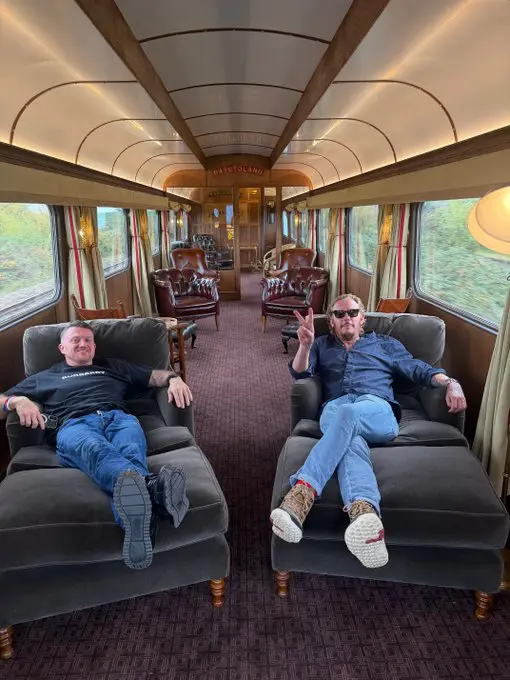
Stephen Yaxley-Lennon, also known as Tommy Robinson alongside far-right talking head Laurence Fox.
‘Operation: Raise the Colours’ acts as a daily visual reminder to racialised people in the UK that some of their neighbours wish them harm — confronting them on the street, on their commute, and even on the way to see loved ones. Families begin to ask themselves: why should I stay here when I am being made to feel so unwelcome? This is racism made pervasive — so normalised that it can be hung in a neighbour’s window.
Powerful people in Britain—such as politicians, governments, and those who ran the empire—have often used the idea of “whiteness” to keep control. They created false ideas of racial superiority to stop poor and working-class people from joining together in solidarity. A well-known example is the signs once seen in housing and shops saying “No Irish, No Blacks, No Dogs.” These signs showed how some groups were pushed out and made to feel like outsiders, even though their struggles were connected. The same tactics are used today. The far right in the UK uses anti-immigration messages to blame migrants and racialised people for problems like low wages, lack of housing, and cuts to public services. In reality, these issues come from government policies, inequality, and years of austerity. By blaming migrants, the far right keeps communities divided and hides the ongoing influence of colonisation in shaping who is seen as part of the nation.
Working class people in this country have a long, proud, vocal heritage supporting the diversity of its communities. White mothers of children of mixed ethnicity took to the streets after the Chief Constable of Merseyside Police Kenneth Oxford disregarded mixed race families in Toxteth as, ‘the product of black seamen and white prostitutes’. Part of the L8 uprisings that took place in 1981 in this part of the city of Liverpool. In 2005, during the Birmingham riots in Lozells, local trade unionists, community organisers, and faith groups came together in the aftermath of racially charged violence to promote unity and resist attempts by far-right groups to divide working-class communities. Rather than allow tension to deepen, grassroots leaders from Caribbean, South Asian, and white working-class backgrounds launched joint initiatives and neighbourhood assemblies focused on solidarity, mutual care, and anti-racist organising.In the aftermath of the Grenfell Tower tragedy in 2017, working-class communities across West London — among them migrants, refugees, long-term residents, and people of every faith and background — came together in grief and anger to support survivors and demand justice. Volunteers organised food, shelter, and legal aid when the state failed to act, showing the same deep-rooted solidarity and mutual care that has long defined diverse working-class neighbourhoods across the country.More recently, entire neighbourhoods in Glasgow, Peckham and many more places, came together to defend their neighbours from active racist anti-immigration action by the state.
Most grassroots projects—often led by women and feminised bodies—carry out the real hard graft of sustaining communities in crisis: organising mutual aid networks, cooking and distributing meals, pooling resources to cover rent or bills, running clothes and toy swaps, offering form-filling support, helping with language learning, setting up childcare collectives, and creating safe spaces where people can rely on each other when institutions fail. This work demands a vast array of skills; coordination, budgeting, negotiation, crisis management, emotional labour, conflict resolution, and deep knowledge of local contexts. It is often carried out across languages and cultures, bridging divides that formal institutions struggle to navigate. Yet these capacities are routinely made invisible, undermined, and minimised precisely because they are associated with feminised labour, and what is notably missing because these stories are untold is that they show, in practice, how diverse communities can work together for the benefit of all, and without presenting an "us vs others" narrative.
Meanwhile, far-right talking heads like Tommy Robinson would not know where to begin with this kind of everyday solidarity. Their influence rests on wealthy backers, media platforms, and performative outrage rather than the patient, multilingual, cross-cultural work of care. The result is an absurd imbalance: those who stitch communities together through skill, resilience, and solidarity are overshadowed by those who trade in inflammation, wealth, power and privilege.
The destructive repercussions of deindustrialisation in this country have fallen hardest on working-class communities, particularly in towns and regions where industries once provided not only stable employment but also shared spaces of solidarity and purpose. With the closure of factories and the dismantling of industries under Margaret Thatcher’s administration in the 1980s, people lost not just jobs but also the social infrastructures; union halls, community centres, workplaces, that enabled them to gather, recognise their commonalities, and rally around shared struggles. This was not simply an inevitable economic shift but an intentional political project: government documents later revealed that the “managed decline” of Liverpool was actively discussed at Cabinet level in 1981, with ministers choosing to withdraw support rather than invest in regeneration. The result was widespread unemployment, poverty, and fragmentation, with communities left to absorb the damage without adequate institutional support. It is precisely these communities, hollowed out by deliberate economic restructuring, that now depend most on grassroots, often feminised, networks of mutual aid to survive. Yet rather than being resourced, they are neglected, stigmatised, or politically exploited by those who thrive on division rather than solidarity.