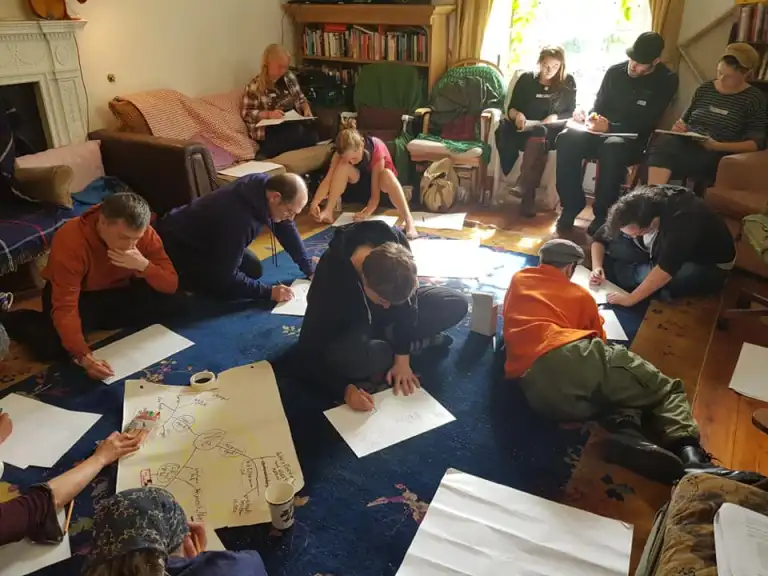
We run workshop programmes called “Exploring Class”, which last one or two days.
These happen across Britain and also online with community groups and social movements.
Our workshops have helped people who are economically marginalised to:
- Reflect deeply on class and how power and resources affect their lives.
- Make stronger connections with each other.
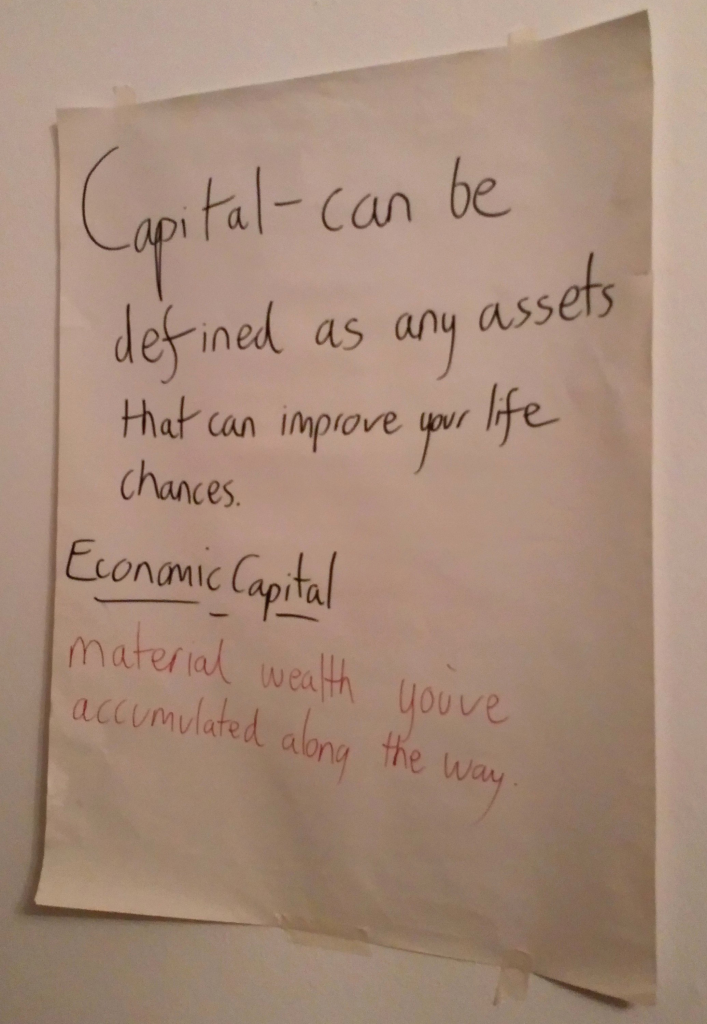
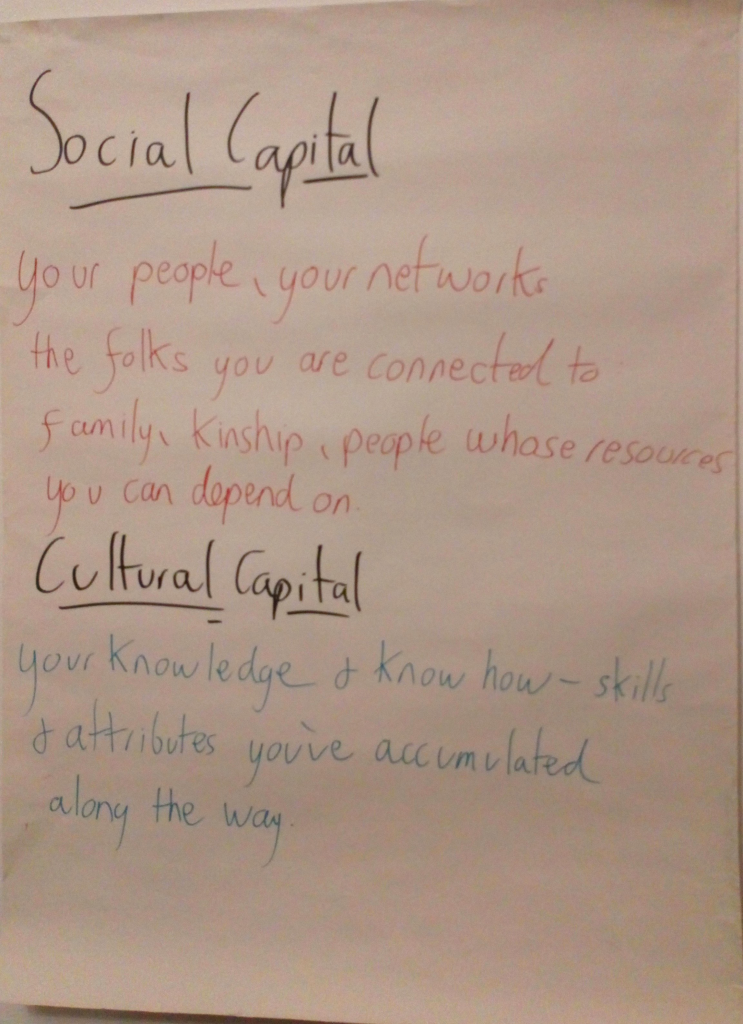
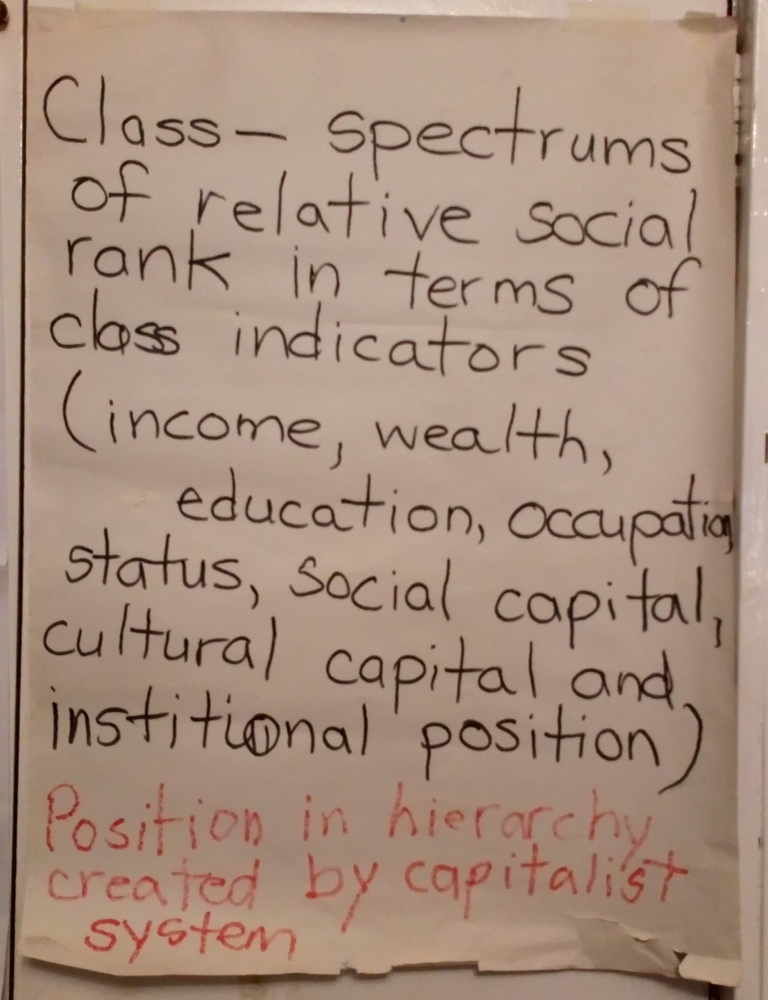
- Understand class differences, including how wealth, networks, education and status play a role.
- Recognise stigma and social status as real pressures, not just ideas.
- Create real change: wealth redistribution, support networks, clearer paths forward.
Some of the positive outcomes
- Organisations and communities have started redistributing resources more fairly.
- Members recognise inequality and support others more intentionally.
- People identify how class tensions show up in their work and lives — and what to do about it.
- A clearer grasp of how class shapes power, and how to move forward while keeping class at the centre.
If you’d like to talk to us about arranging a workshop or consultation — drop us a line at: info@theclassworkproject.com
Testimonials
- Stephanie Brobbey, Good Ancestor Movement: Our workshop with the Class Work Project was an inflection point in our organisational development and will hold a significant place in our organisational memory. From the preparatory logistics to the workshop delivery and follow up engagement, our experience was rooted in care and solidarity. The workshop itself was deeply challenging and confronting but extremely rewarding. Robust education on one of the most dominant structures in our society is woefully inadequate. The Class Work Project is filling a critical gap in the new economy movement by providing analysis and practices fit for today’s challenges.
- Lucy Mason, Trainer & Co-Director Tripod: Training for Creative Social Action: The Class Works Project are doing essential work to create open dialogue about class differences and oppression and support people who are fighting to build a better future to turn understanding in to action. I have seen plenty of challenging and provocative conversations inspired by the Class Works Project lead to more effective collaboration and more equitable distribution of resources in social justice movements in Scotland.
- Tahra Anitya: The collective working on Lumpen and the class workshops are the only people I’ve encountered doing effective work based around class through an intersectional lens. It is vital work that is challenging individuals and communities to stretch into finding what is needed to create real change working for economic justice. At this moment of political crisis and rising right wing dominance, supporting these clear, articulate and informed voices to deliver this transformative work is imperative.
- Natalia Szarek, Leeds:
The housing coop I live in worked with the Class Work Project to host a two day workshop in Leeds which brought together a range of people from Leeds (most of whom were in housing coops or queer networks). The space of the workshop was really well held, striking an impressive balance between asking the participants to engage with really difficult topics on a personal, relational and societal level, but also being a really supportive space that built solidarity and collective perspective. The impacts of the workshop have been ongoing, and I think we will see a lot of ripple effects over the coming years.
Within my housing co-op, we’ve been able to move forward with conversations about class that have caused tension and conflict in the past, creating a shared political will across co-op members to engage in mediation and more equitable rent levels. This has been possible because of the shared language that the Class Work Project workshop introduced us to, a deeper understanding of how class plays out within our coop, and a feeling that we were part of a bigger movement grappling with these issues and taking steps towards addressing them.
Beyond our co-op, a collective has emerged from participants of the CWP workshop that is seeking to establish ongoing work around wealth redistribution and political education. This has been a positive and generative space in which people from different class backgrounds are able to work together, grounded in a strong analysis that we began to develop together in the CWP workshop. Because of the incredibly skilled, principled and compassionate way that facilitators from the CWP were able to hold the space in the workshop, we were able to move through a lot of tension, anger and shame and emerge with a really strong foundation from which to build relationships of trust, care, and collective commitment towards social change. - Kai: After attending an ‘Exploring Class’ workshop in another city a few years ago which completely changed how I saw the world, I was really motivated to bring the same workshop to my local area. I organised an ‘Exploring Class’ workshop for my local community and found the Class Work Project so lovely to work with, and really capable of personalising the workshop completely around our specific needs. The workshop was so well facilitated; paying attention to every small dynamic and tension within and outside of the room, and guiding us seamlessly through a huge emotional learning experience together. We all felt very well ‘held’ and we’ve come out of it with a strong shared language and experience which has led to a long term class-focused redistribution project in my local community. I have now been to the same workshop twice, and would go again without a doubt. This workshop has fundamentally changed my outlook and I would recommend it to everybody.
- Caleb Elliot: The class work project workshop I attended was a transformative experience that pushed me to confront my own class privilege and engage in candid discussions about wealth and capital distribution within radical movements. As I delved into the workshop’s activities, I realized how my background had shielded me from the harsh realities that many individuals face in society.
The workshop’s focus on class privilege was eye-opening. It encouraged us to critically examine our own economic advantages and how they might inadvertently perpetuate systems of inequality. I found myself grappling with the guilt and discomfort that can accompany acknowledging one’s privilege, but it was an essential step towards self-awareness.
The most powerful aspect of the workshop was the opportunity to engage in honest cross-class discussions. By sharing our personal experiences and listening to others, we uncovered the complexities of wealth and capital distribution. These discussions shattered preconceived notions and fostered empathy, driving home the importance of solidarity.
Ultimately, this workshop was a catalyst for personal growth and a deeper understanding of solidarity. It challenged my class privilege, but it also gave me the tools to address it constructively and contribute to a more equitable future.